
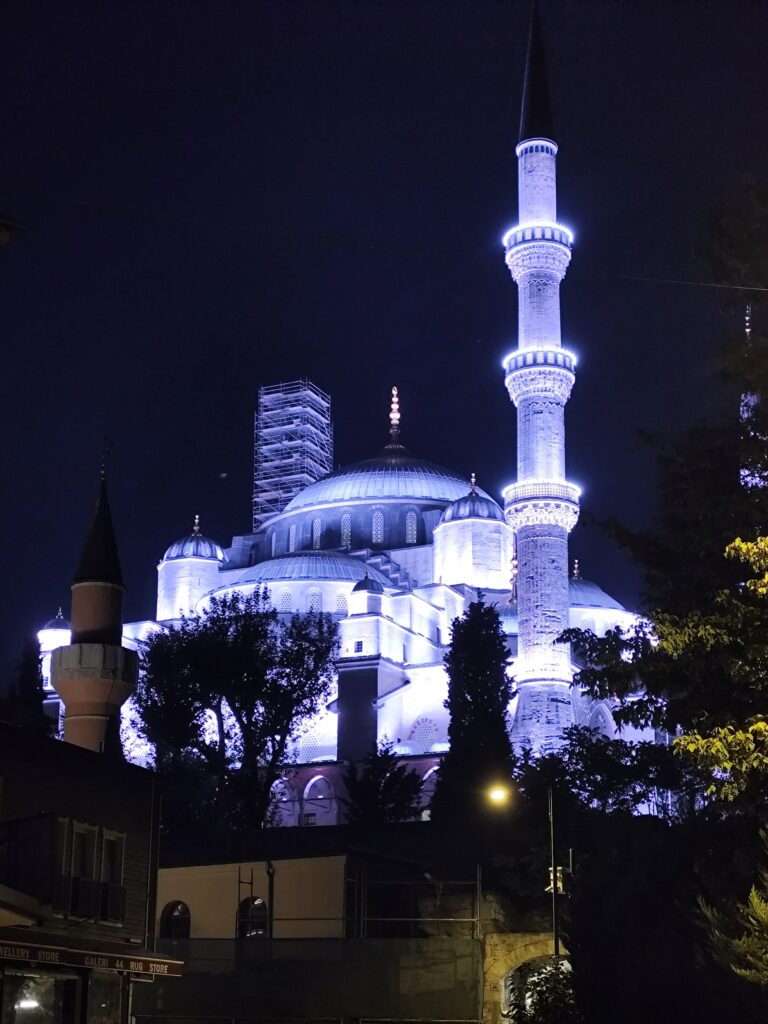
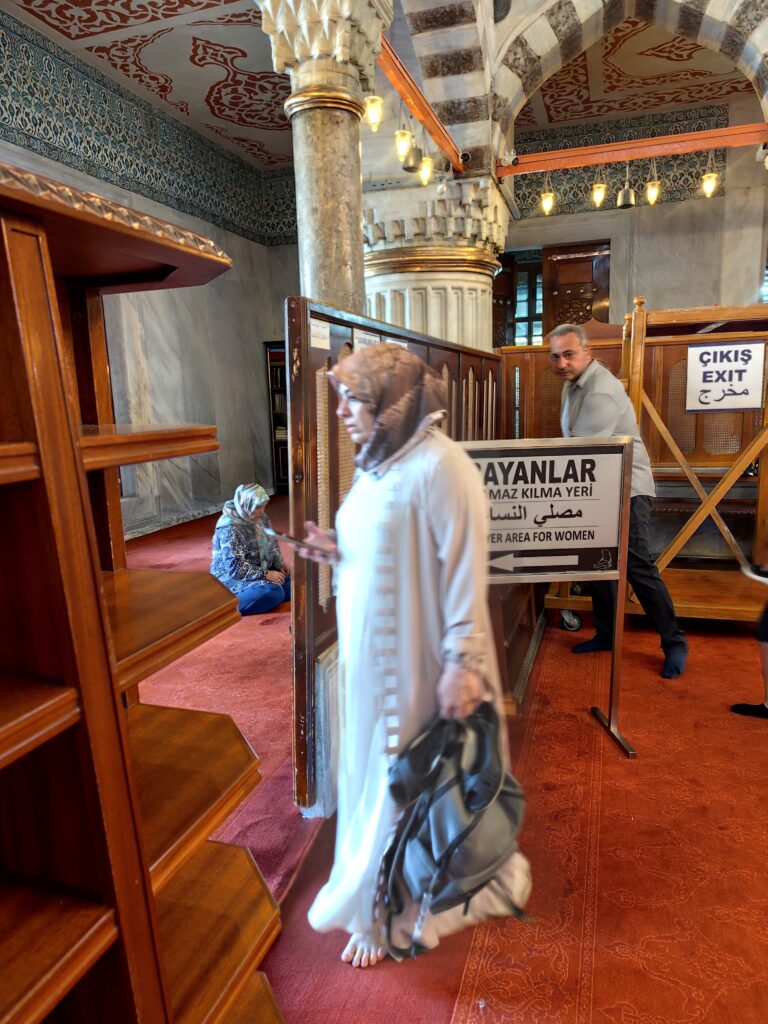
This time, we’re dedicating three days to an urban trek through Istanbul—a place where East meets West, and every street tells a story. Once we land at Istanbul’s Sabiha Gökçen Airport (SAW), on the Asian side of the city, we hop on the train directly beneath the airport, heading toward Kadıköy—the final stop on the Bosphorus. One hour later,stepping out of the metro, we find ourselves on the Kadıköy waterfront. We board a ferry to Eminönü, on the European side, right at the mouth of the Golden Horn. The view from the boat is stunning—minarets piercing the skyline, seagulls dancing in the wind. Just a short walk from the dock, we arrive at one of Istanbul’s most iconic landmarks: the majestic Blue Mosque, standing proudly with its cascading domes and six slender minarets.
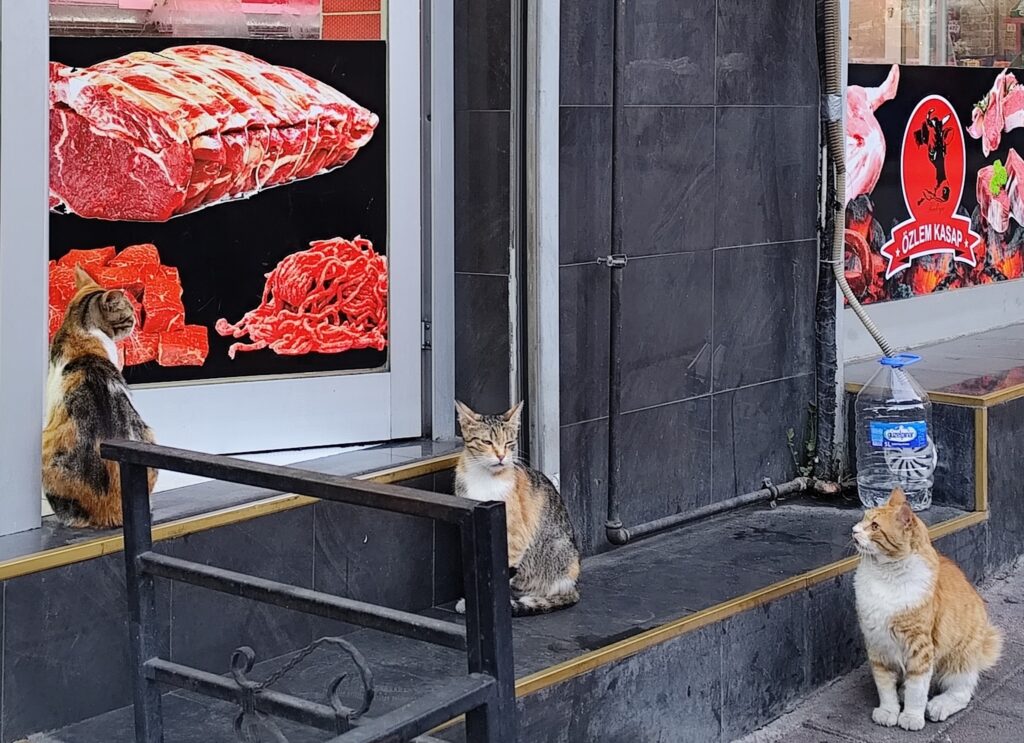
We are in the historic center of Istanbul, where the urban cat population is absolutely out of control…
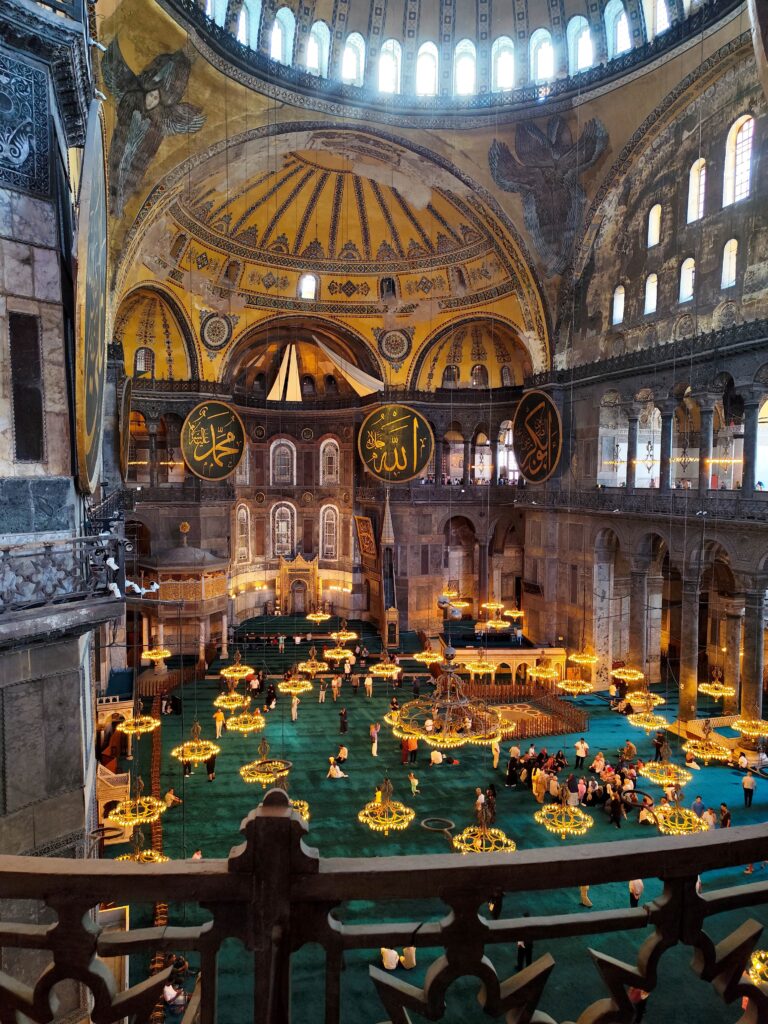
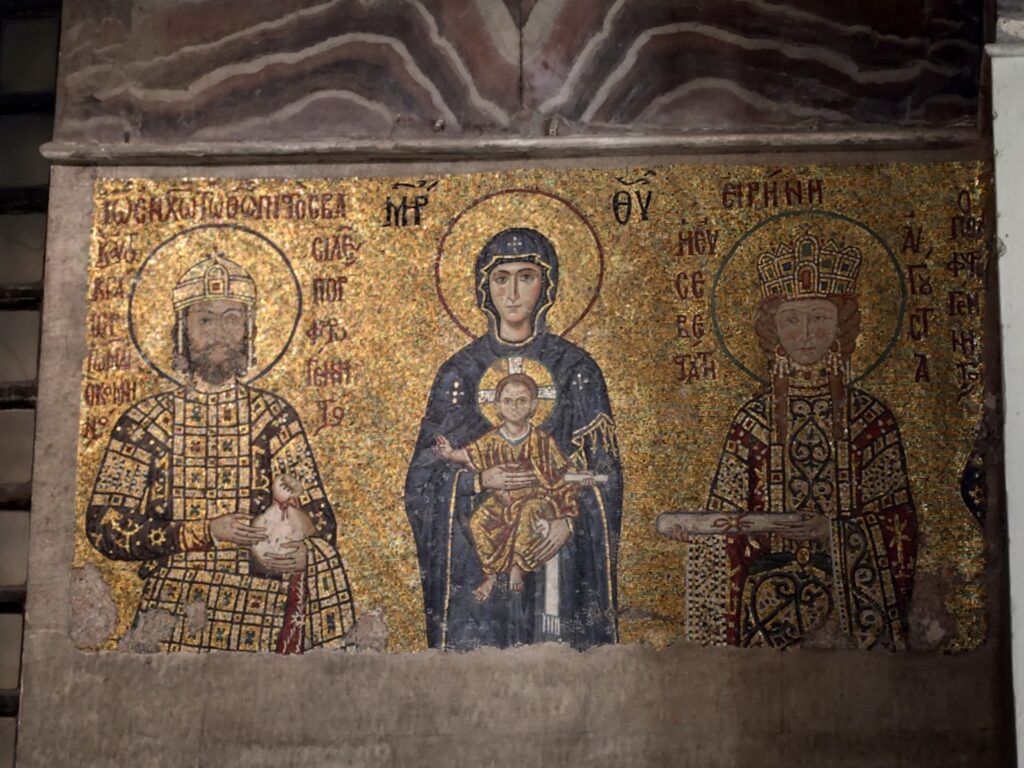
Just a few hundred meters from the Blue Mosque, we join the queue to visit Hagia Sophia. The ticket is steep—€50 per person—and the line is long. From the outside, it appears more modest than the Blue Mosque, perhaps due to the ongoing restoration work that partially hides its grandeur. Inside, visitors like us are directed to the upper gallery, which wraps around the interior and offers a panoramic view of the prayer space below. The impression is one of layered history—almost chaotic in its beauty. Christian symbols from the Byzantine era (500–1400) overlap with Islamic elements from the Ottoman period (1400–1923). It’s a visual dialogue (or fight?) between two faiths, really. After the fall of the Ottoman Empire Hagia Sophia was converted into a museum. Recently, in 2020, by decree of President Erdoğan, Hagia Sophia was reconverted into an active mosque. The atmosphere has shifted—less museum, more sacred space. The Christian frescoes and mosaics, though still visible, are in poor condition. It continues to embody Istanbul’s layered identity, suspended between past and present.
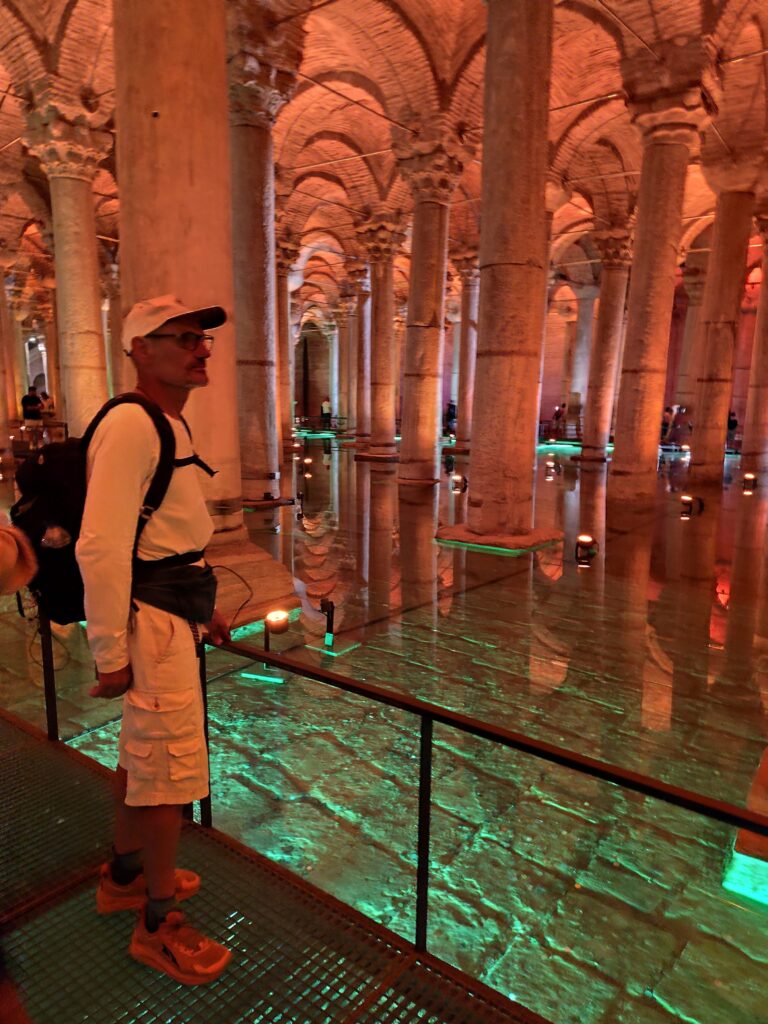
So closed from where we are, we reach the entrance to the Basilica Cistern. What lies underground is truly extraordinary. This vast subterranean reservoir, supported by 300 stone columns, was built by the Romans around 500 AD to supply water to Constantinople. The water was channeled from the lush and rainy Belgrad Forest, located 25 km from the city, with the final stretch carried by the Roman-built Valens Aqueduct. It wasn’t until the 1500s, one hundred years after their conquest, that the Ottomans discovered its existence—cleverly concealed by locals who had quietly drawn water from it for generations.
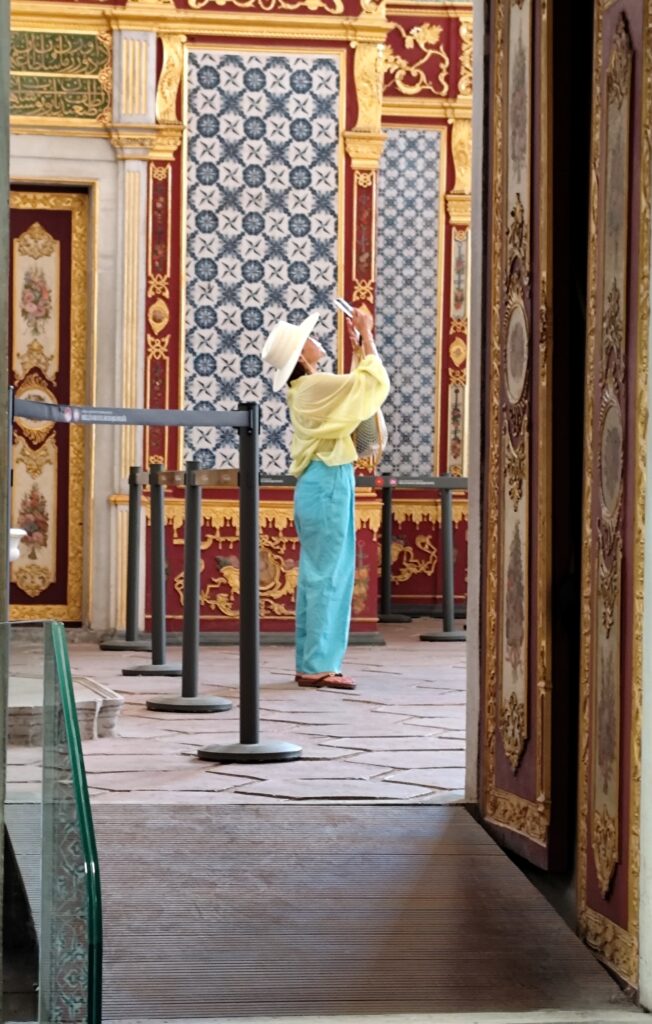
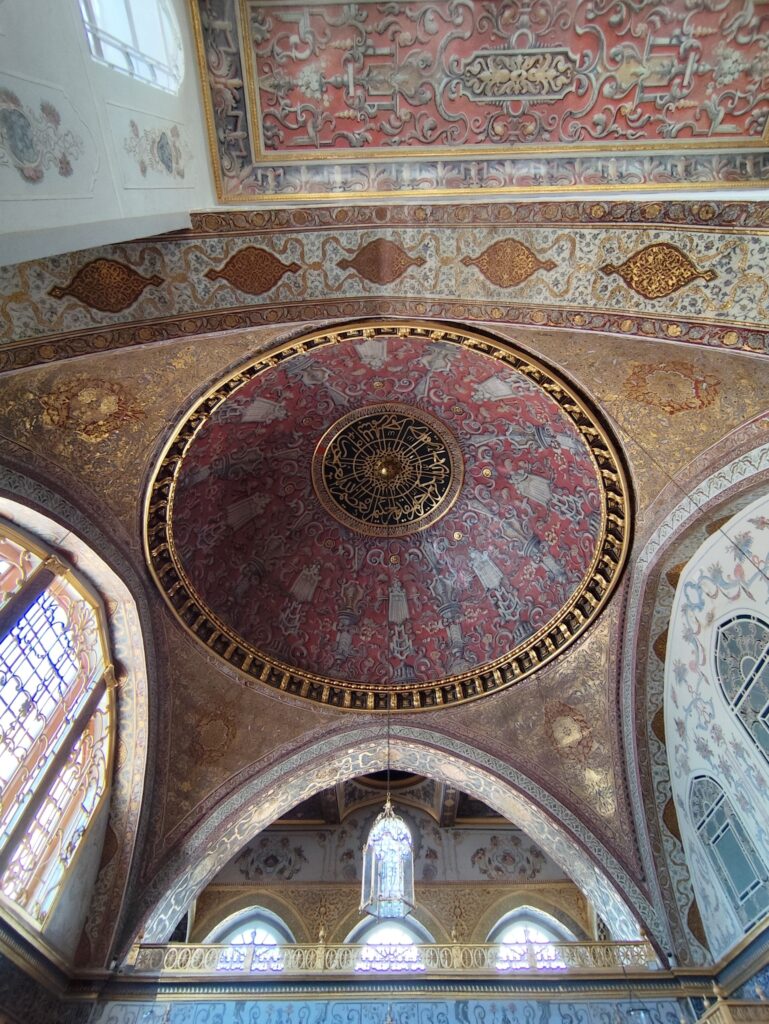
This morning began with a cup of herbal tea. Then we set off on foot toward Topkapi Palace, the legendary residence of Ottoman sultans. Nestled between the Bosphorus and the Golden Horn, the palace sprawls across a gently sloping hill — a location as strategic as it is. But Topkapi isn’t a single structure — it’s a sprawling complex of buildings commissioned over centuries by successive sultans, from the 1500s to the early 1900s. The harem unfolds like a labyrinth. Dormitories, lavish baths, and grand halls once housed nearly 300 concubines and the black eunuchs who guarded them. These were also the private quarters of the sultan and his mother. We wandered through opulent chambers where ambassadors were received and high-level meetings took place. Each territorial conquest is commemorated with its own pavilion — a sultan’s architectural tribute to glory. And yet, despite its vastness Topkapi didn’t quite leave the impression we expected. Perhaps because it’s impossible to grasp the full grandeur in a single view.

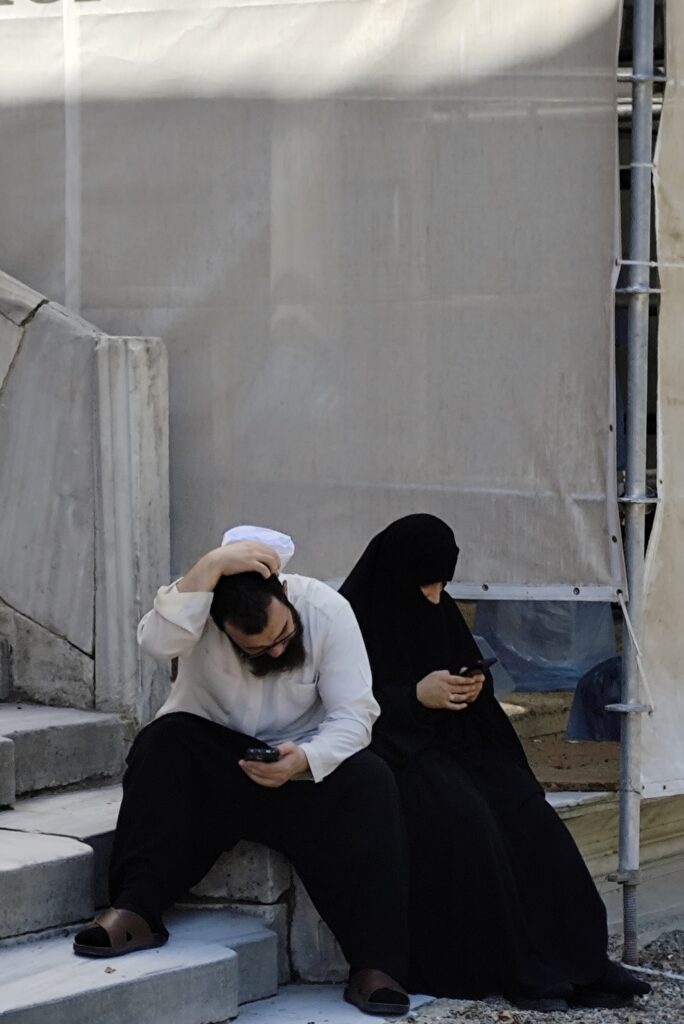
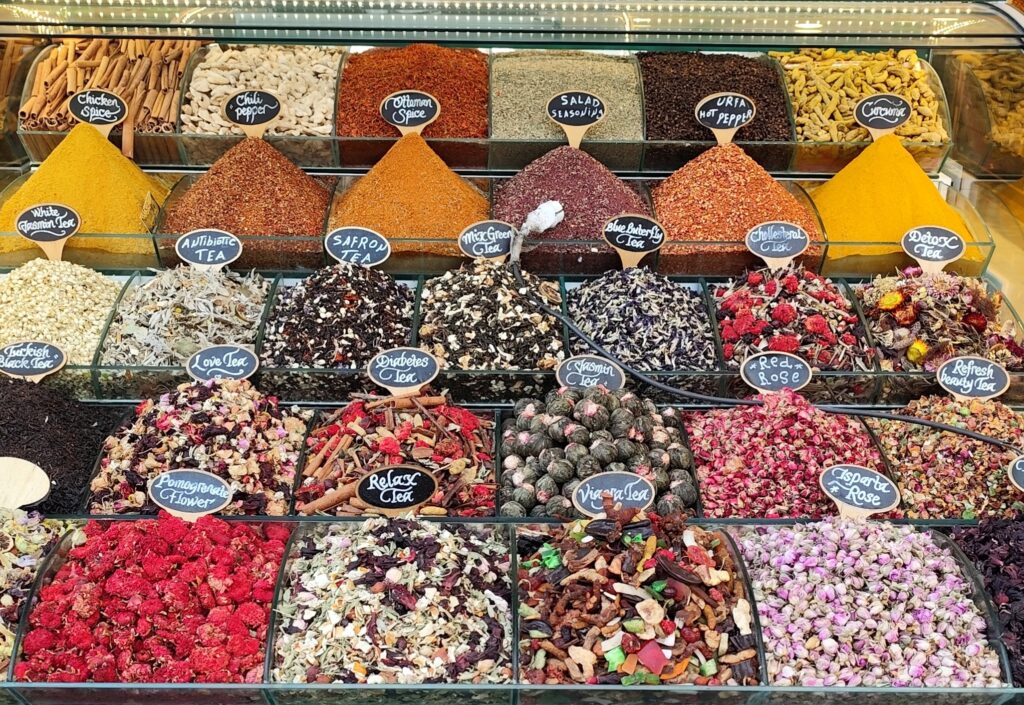
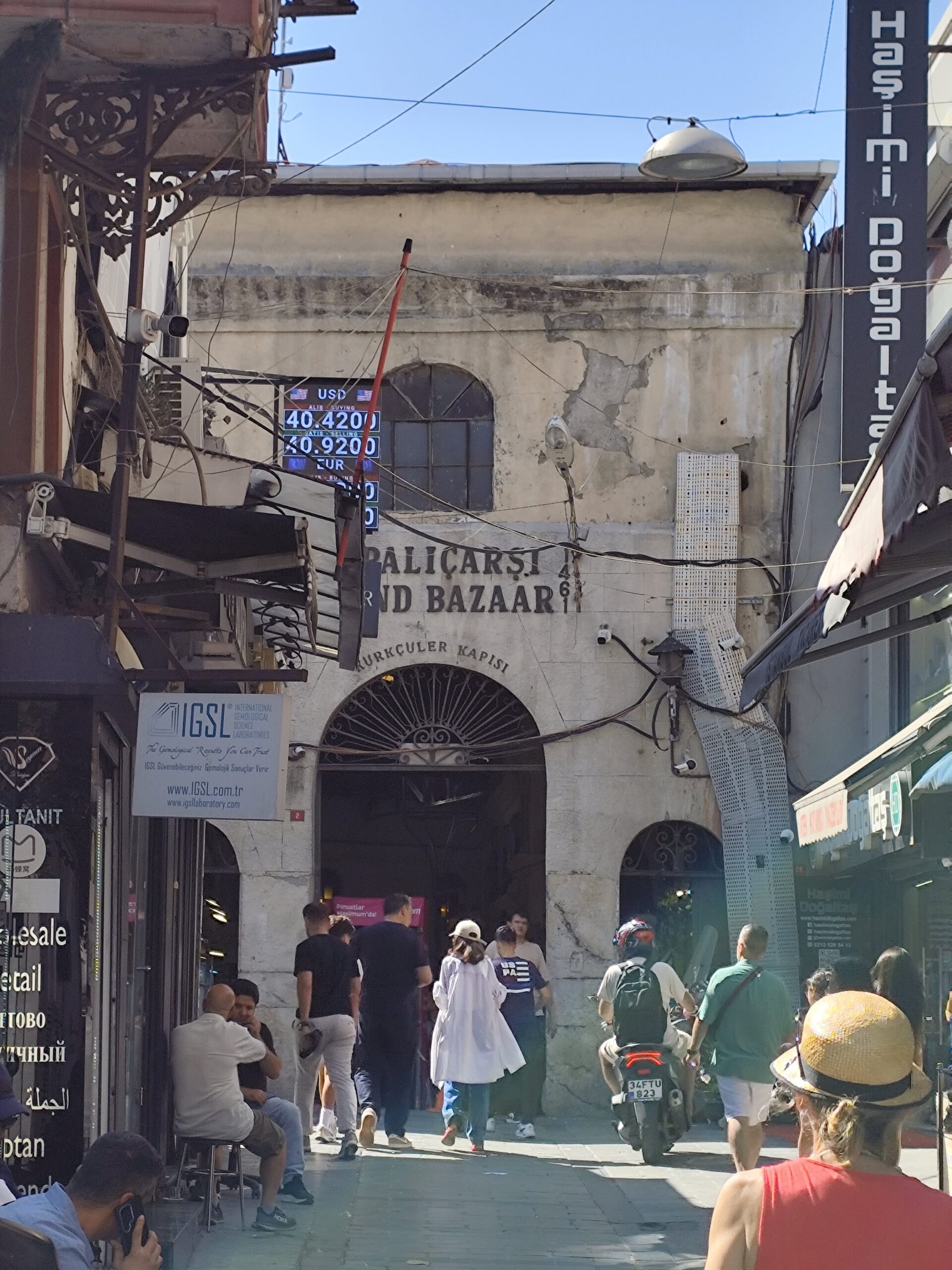
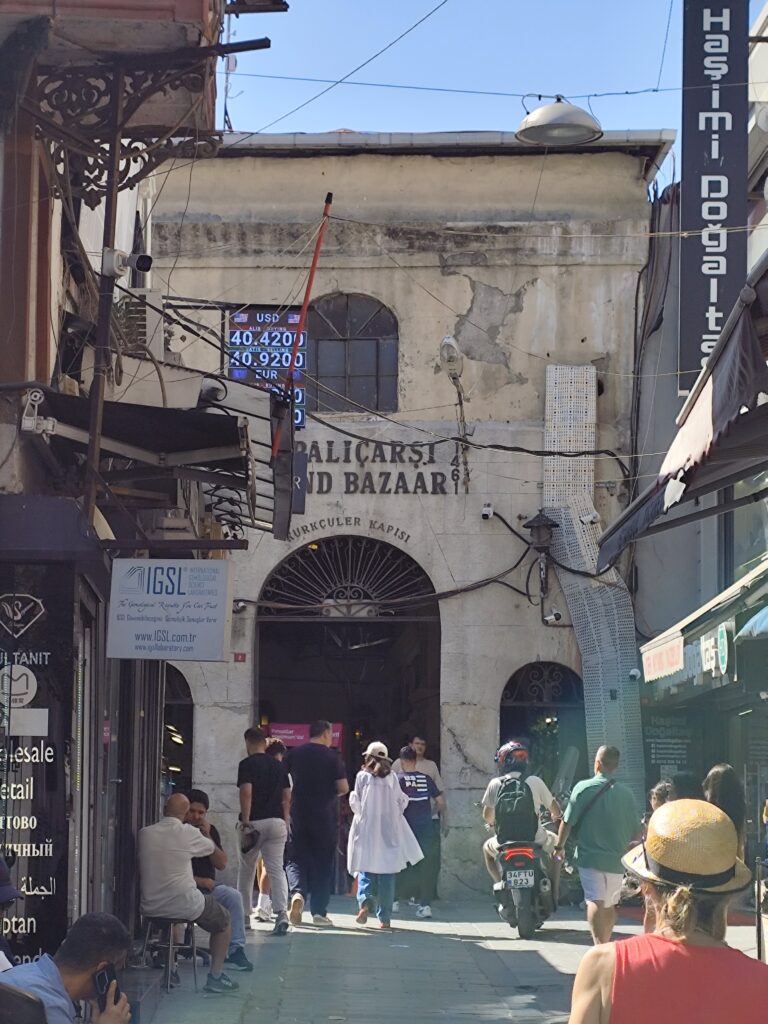
We grab lunch at Le Safran, right across from Topkapi Palace. A salty sour cream spread kicks things off, followed by chicken strips, mixed salad, and a cold beer. Yet, curiously, we haven’t seen any women working as waitresses, as if that role were somehow off-limits to them. Outside, a cheeky ice cream vendor in red-and-gold uniform entertains with juggling tricks — though the ice cream itself is a bit too sticky for our taste. By 3 PM, we head to the Spice Bazaar. After the security check, we enter a maze of covered alleys packed with spices, jewelry, watches, and the usual flood of bags, shoes, and clothes. It’s cooler inside, but just as chaotic — a whirlwind of colors, scents, and people from every corner of the globe.

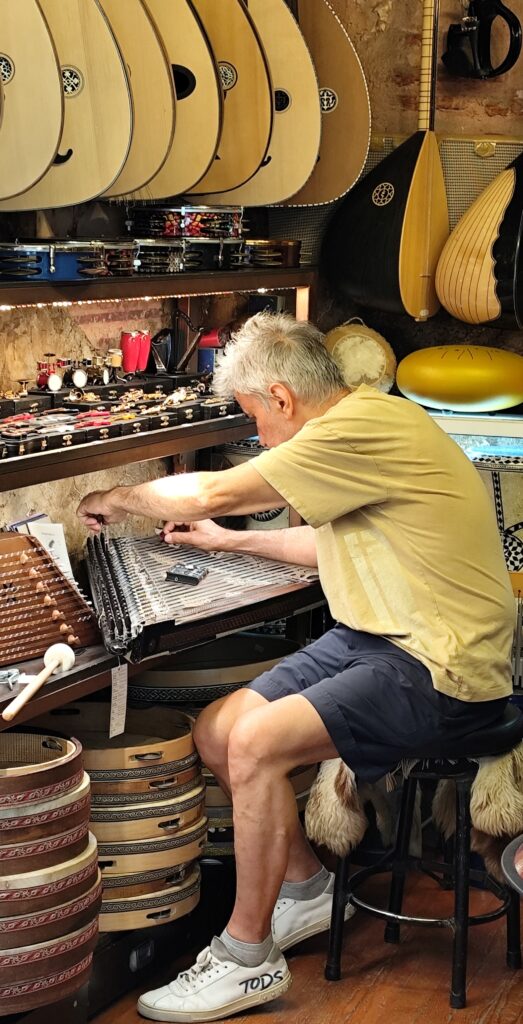
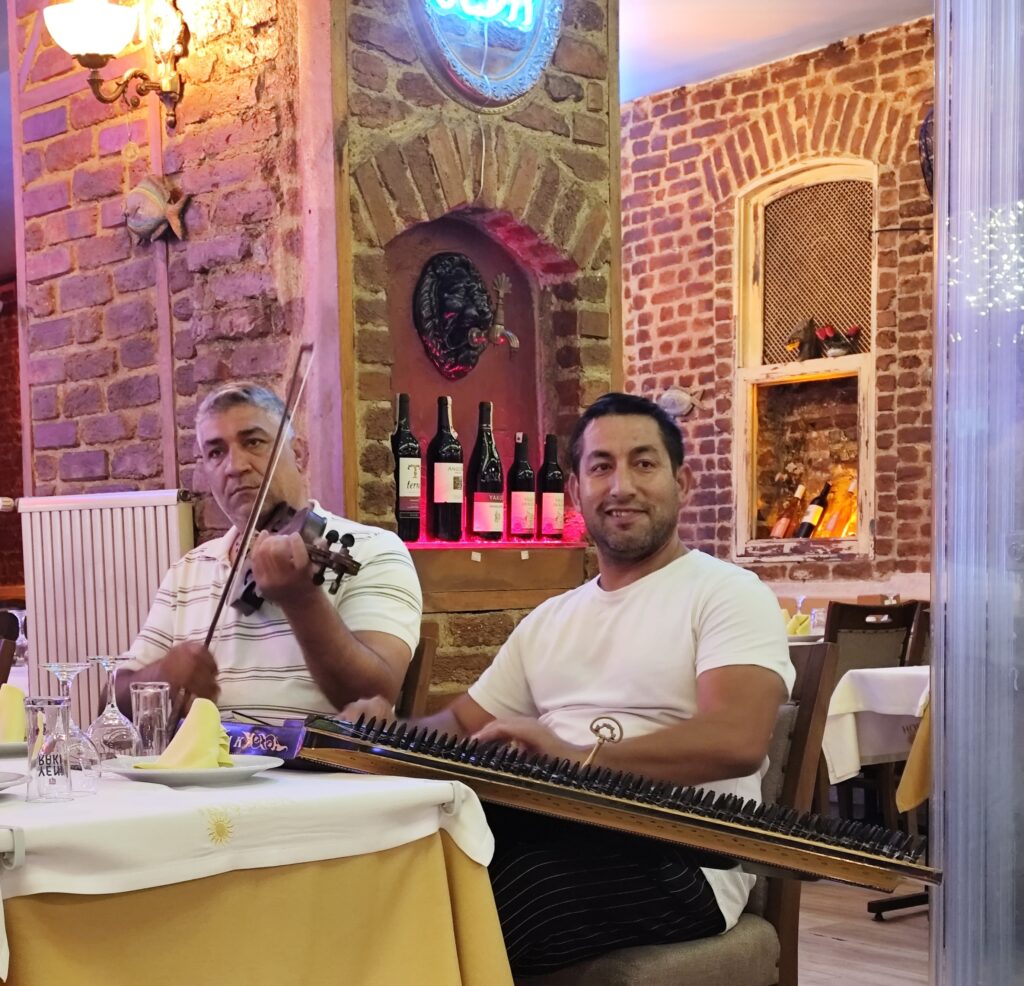
Turks seem to avoid using coins, likely due to their low value. The smallest bill is 5 lira, barely €0.10. This morning we have breakfast around 8 AM at a local pastry shop, enjoying tea and a pistachio treat. Then we wander through narrow alleys toward Eminönü Pier for our Bosphorus crossing.. Street vendors are setting up stalls — clothes and shoes everywhere. In basement workshops, the city hums to life: someone’s cutting fabric, another unwinding electrical coils, crafting shoes, or tuning a kanun, the traditional string instrument.
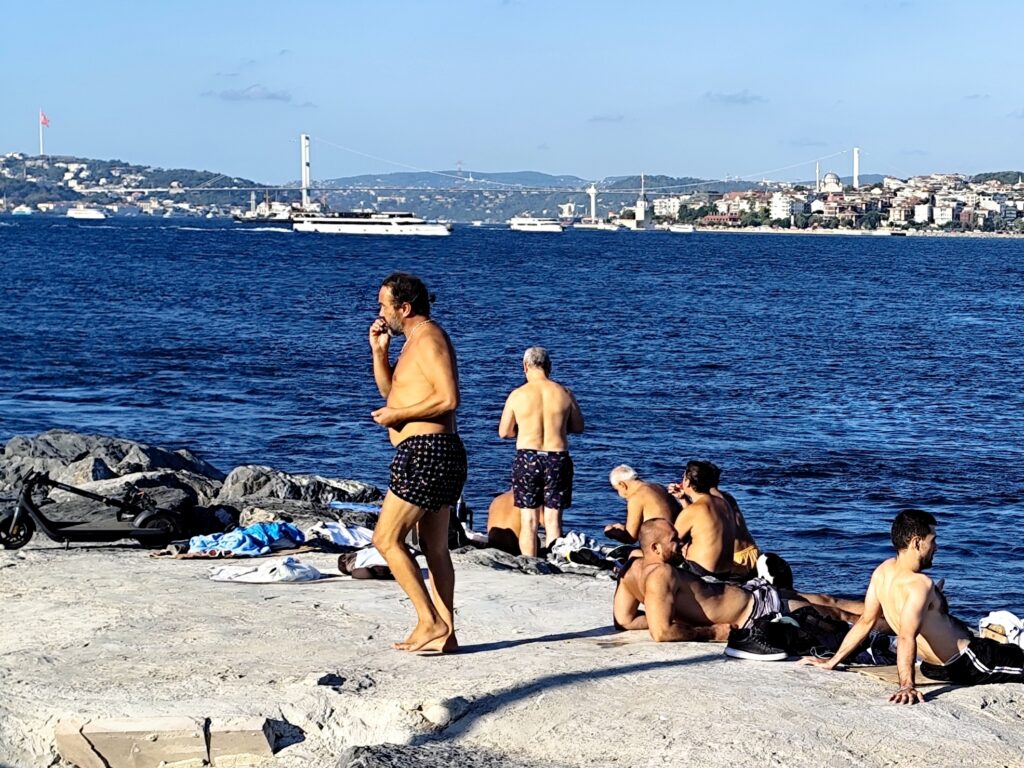
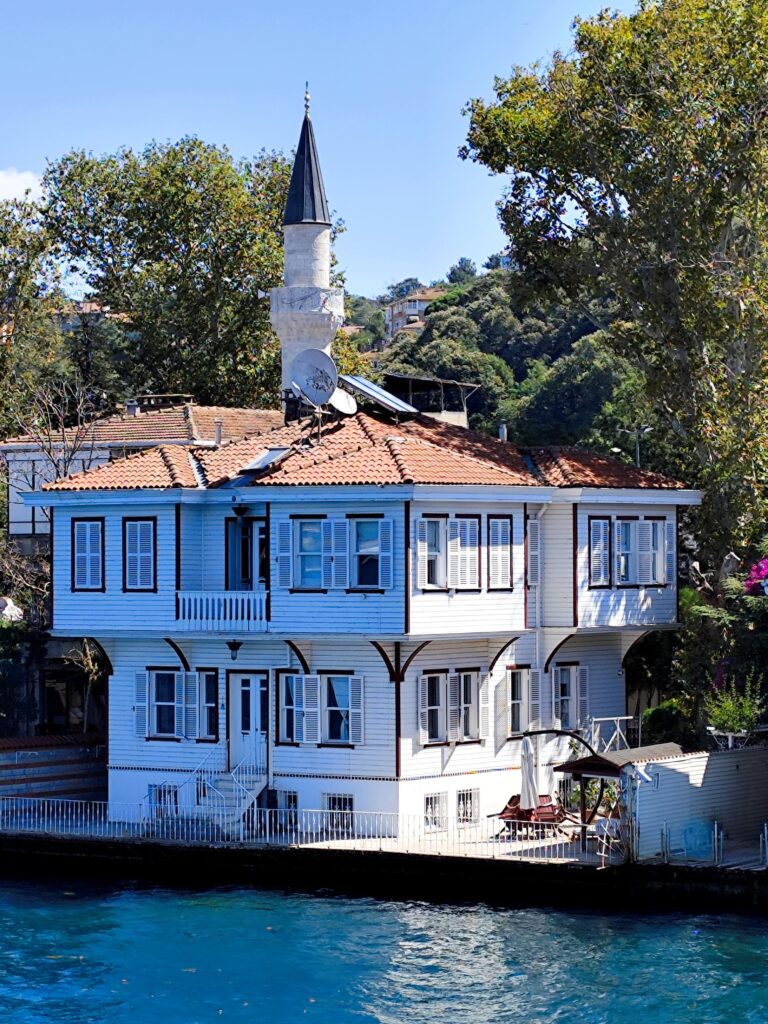
Last urban trek day, fully dedicated to a Bosphorus tour. This strait is a lively mix of ferries, barges, and boats of every kind. Along both shores, we pass historic mansions, wooden houses, the Fortress, and Dolmabahçe Palace, once home to Atatürk. Beyond the main bridge, two more span the strait — one near the Black Sea. We reach Anadolu Kavağı, the final stop, and enjoy lunch by the water: sardines, tomato salad, mixed grilled meats, and still water — all for €32 with a sea view. Quite cheap. The village is quiet, with little to explore, except for the ruins of a fortress atop the hill. At 3 PM, we head back. Onboard, a charming Turkish man entertains two cheerful American tourists. Nearby, a couple — he from southern Italy, she South American — chat together. She asks simple questions to flatter him; he replies with even simpler answers. She pretends to believe him, but laughs looking to her father. Latin style. After two hours, we’re back in Eminönü. Tired, but with our eyes still filled with the stunning views of Bosphorus. End of our trip, ready for writing memories.



Start the discussion